
Snails will be died in a short time because of hemolysis after sucking or contacting saponin.
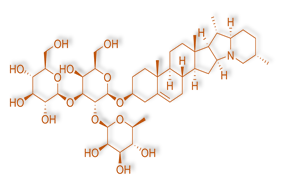
Snails will be died in a short time because of hemolysis after sucking or contacting saponin.
Tea saponin is molluscicide from plant extract, the active content is a kind of triterpenoid saponin extracted from camellia seeds.
It doesn’t have any potential harm to humans, animals and environment. Using in rice and vegetable field to kill snails, especially Pomacea canaliculate (Golden Apple Snail). And using in turf to control earthworm.
Tea Saponin, a glycoside compound extracted from camellia tea seeds, is excellent natural nonionic active surfactant.
It can be widely used in pesticide, cultivation, textile, daily chemicals, arthitectural field, medical field and so on.
On cereal crops, such as rice, wheat, corn and potato, etc.
– to control rice stem borer, rice leaf roller, rice planthopper, wheat aphid, corn borer, fall armyworm, armyworm, potato underground insect pest, etc.
On Fruit trees, such as apple, citrus, pear, peach, Longan, lichee, mango, red date, pomegranate, blue berry, grape, cherry, etc.
– to control psyllid, scale insects, aphid, leaf roller, fruit borer, etc.
On Vegetables: Solanaceae, cucurbita, leafy veg, root veg, etc.
– to control thrips, white flies, aphids, Diamond back moth, cabbage moth, cabbage Spodoptera litura, underground insect pests, etc.
Controls soil pests
-grub, wireworm, cutworm, maggot, etc.

· Fungal Insecticide
– Live spores infest insect pests, gradually increasing the killing efficiency
· Broader spectrum, highly effective
– controling many species of insect pests with a single product
· Long-lasting control
– infesting insect pests repeatedly, helping chemical pesticides reduce and relieve of resistance, mitigating pest threat.
· Smart & Safe
– only kills insect pests, friendly to natural enemies and beneficial organisms.
· Environment-friendly
– no residue, no interval, safe to agricultural produces and environment
· Inhibiting some pathogenic diseases, promoting plant growth

NOSPOT a ‘hybrid’ of a biological and a chemical,
Biological–Biocure belongs to cytosine peptide type broad-spectrum antibiotic fungicide, which has preventive and therapeutic effects, can inhibit the growth of fungal mycelium, induce plants to produce resistant proteins, and improve plant immunity;
Chemical–Tebuconazole is a triazole pesticide fungicide with strong activity and good preventive and therapeutic effects. It exerts bactericidal activity mainly by inhibiting the demethylation of sterols in pathogenic fungi, resulting in the blocking of biofilm formation.
NOSPOT is made up of two active ingredients with different mechanisms of action, and has a good control effect on banana leaf spot.
Application of in different period of rice growth

Remarks: increase the dosage of Metarhizium anisopliae OD for the outbreak of rice planthopper and leaf roller, the volume should be increased to 5-6 times more than that of the normal.
Metarhizium anisopliae prevents and controls many species of Agricultural & Forest insect pests and sanitary insect pests
On cereal crops, such as rice, wheat, corn and potato, etc.
– to control rice stem borer, rice leaf roller, rice planthopper, wheat aphid, corn borer, fall armyworm, armyworm, potato underground insect pest, etc.
On Fruit trees, such as apple, citrus, pear, peach, Longan, lichee, mango, red date, pomegranate, blue berry, grape, cherry, etc.
– to control psyllid, scale insects, aphid, leaf roller, fruit borer, etc..
On Vegetables: Solanaceae, cucurbita, leafy veg, root veg, etc.
– to control thrips, white flies, aphids, Diamond back moth, cabbage moth, cabbage Spodoptera litura, underground insect pests, etc.
On Cash Crops: sorghum, cotton, peanut, sugarcane, soybean, Sichuan pepper, etc.
– to control underground pests, cotton bollworm, sugarcane borer, bean borer, aphid, etc.
On Chinese medicinal herbs: biloba, RADIX CODONOPSIS, Milkvetch Root, wolfberry, ginseng, pseudo-ginseng, bletilla striata, etc.
– to control underground insect pests, grub, aphid, thrip, beetle, etc.
Horticulture (flower), forest, grassland:
– to control aphids, thrips, underground pests, longicorn, pine caterpillars, grasshopper, etc.
Public health insect Pests:
-to control cockroach, flea, mosquito, larvae, flies, maggot, etc.
Manual Spray
Dilute the OD product( 900-1,200 mL/ha) in 450-675 L of water, spray the dilution to the plant parts where insect pest inhabits and infest above ground.
Mechanical Spray
Dilute the OD product( 900-1,200 mL/ha ) in 450-675 L of water, spray the dilution to the plant parts where insect pest inhabits and infest above ground.
Drone Spray
Dilute the OD product( 900-1200 mL/ha) in 15-22.5L of water, spray the dilution to the crop plants 2-3 meters above the plants.
Treated parts of crop plant:
Focus spraying to plant parts where pests inhabit.
Rice leaf roller: Spray to upper part of plants; Rice planthopper: Spray to lower part of plants
For thrips: Spray to flowers and withered flowers
Underground pests: broadcast application of CQMa421 granular in the field when ploughing field; and furrow and hole
application before sowing , depends on the distribution of underground pests on various crops.
Recommended volume of pesticide suspension for appication.
The minimum volume of pesiticide suspension for effective spraying to key parts! Tea trees: 60-90 L/667M2 recommended.
Application period: It is good to spray at early stage of pest larvae, and its control index for pest could be 1/5 – 1/3 of that by chemical pesticides.
Application time: when pests attack plants, apply it in cloudy days or in late afternoon, avoiding strong sunshine. Repeated
spraying needed when it heavyly rains within 24 hours after previous application (But no need for repeating spray when drizzling). To kill thrips apply spraying before flowers closed (before 10 a.m.) (Adding a little black sugar in Metarhizium anisopliae dilution could improve its efficacy to kill thrips)
Application Frequency:
Similarly frequent as chemical pesticides, when pest population grows slowly;
7 days after the 1st application, the 2nd application needed when the pest population grows fast.
Precautions: forbidden to use in silkworm mulberry garden; avoid to use granules in drought soil condition. (Drought soil means its moisture is less than 15%)
 lin-chemical.com