Gibberellic acid

Gibberelin Gibberellic acid (also called Gibberellin A3, GA, and GA3) is a hormonefound in plants and fungi .

Its chemical formula is C19H22O6. When purified, it is a white to pale-yellow solid. Plants in their normal state produce large amounts of GA3.

It is possible to produce the hormone industrially using microorganisms. Nowadays, it is produced by submerse fermentation, but this process presented low yield with high production costs and hence higher prices.

One alternative process to reduce costs of the GA3 production is Solid-State Fermentation (SSF) that allows the use of agro-industrial residues.

Gibberellic acid is a simple gibberellin, a pentacyclic diterpene acid promoting growth and elongation of cells. It affects decomposition of plants and helps plants grow if used in small amounts, but eventually plants develop tolerance to it. GA stimulates the cells of germinating seeds to produce mRNA molecules that code for hydrolytic enzymes.

Gibberellic acid is a very potent hormone whose natural occurrence in plants controls their development. Since GA regulates growth, applications of very low concentrations can have a profound effect while too much will have the opposite effect. It is usually used in concentrations between 0.01 and 10 mg/L.

GA was first identified in Japan in 1926, as a metabolic by-product of the plant pathogen Gibberella fujikuroi (thus the name), which afflicts rice plants; fujikuroi-infected plants develop bakanae (“foolish seedling”), which causes them to grow so much taller than normal that they die from no longer being sturdy enough to support their own weight.Gibberellins have a number of effects on plant development.

They can stimulate rapid stem and root growth, induce mitotic division in the leaves of some plants, and increase seed germination rate.Gibberellic acid is sometimes used in laboratory and greenhouse settings to trigger germination in seeds that would otherwise remain dormant.

It is also widely used in the grape-growing industry as a hormone to induce the production of larger bundles and bigger grapes, especially Thompson seedless grapes.

In the Okanagan and Creston valleys, it is also used as a growth replicator in the cherry industry.

It is used on Clementine Mandarin oranges, which may otherwise cross-pollinate with other citrus and grow undesirable seeds.

Applied directly on the blossoms as a spray, it allows for Clementines to produce a full crop of fruit without seeds.

Silicone Surfactants

Silicone surfactants have the intriguing and commercially viable ability to reduce the surface tension of polar and non-polar liquids to values 15–20 mN/m lower than commonly achieved with organic-based surfactants.

The latest developments on understanding and commercially exploiting the phenomenon of superwetting are reviewed.

Silicone surfactants demonstrate a marked tendency to form aggregate structures featuring surfactant bilayers including vesicles and lamellar liquid crystals.

Adjuvants’ role in combatting herbicide resistance  

Tank mix compatibility rule

Growers use tank mixes all the time to apply all of the required ag inputs in an efficient manner. Every one of these mixes is different and while many will not cause any problems, some formulations are not compatible with each other and cause a big mess and a bigger headache. Ag professionals can use a couple of techniques to avoid tank mix compatibility issues in their sprayer.

Tank mix compatibility issuesMixing Order

When mixing products, growers should add products to the spray tank in a specific order to avoid mixing problems. While growers need to consult the labels on the products they are using for specific mixing instructions, generally products should be added to the tank using the W-A-L-E-S method

Jar Test

If growers have a specific tank mix that they are concerned with, a small “jar test can save a lot of hard work and money. In this test, we mix the products that would be in the tank mix in a small, clear, pesticide-safe container at the same concentrations as the tank mix. We can then evaluate the jar test and examine the compatibility of the products in the mix. It is much easier to dispose of a small container of incompatible mix rather than clean out a large sprayer tank full of the same mix.

Glycine Betaine

0HBZAYCOAZD7[(0CRKE]01E

Good quality Betaine for being used as moisturizer for fruits.

Glycine betaine (N,N,N-trimethyl glycine) is an amphoteric compound that is electrically neutral over a wide range of physiological pH values.

It is extremely soluble in water but includes a non-polar hydrocarbon moiety that consists of three methyl groups.

The molecular features of GB allow it to interact with both hydrophilic and hydrophobic domains of macromolecules, such as enzymes and protein complexes. Studies in vitro have indicated that GB is not merely a nontoxic, cellular osmolyte that raises intracellular osmolarity when a cell is exposed to stress-induced hyperosmotic conditions: it has been well documented that, in vitro,

GB stabilizes the structures and activities of enzymes and protein complexes and maintains the integrity of membranes against the damaging effects of excessive salt, cold, heat and freezing

content: 98%min.

packing size: 25kg/drum

An evaluation of the effect of exogenous glycinebetaine on the growth and yield of soybean

Various soybean cultivars were grown under different watering regimes in the field and greenhouse in south-eastern U.S.A. (1995 and 1996), and in the field in north-eastern Western Australia (1995).
Aqueous glycinebetaine was applied at different growth stages onto their foliage with the objective of ameliorating effects of water stress on photosynthesis activity, nitrogen fixation, leaf growth, biomass accumulation and seed yield.
There were cultivar differences in response to drought. Trends which suggest that exogenous glycinebetaine could improve photosynthesis activity, nitrogen fixation and leaf area development, were established.
The observed seed yield increase of both well-watered and drought-stressed plants was associated with greater number of seeds following the application of 3 kg ha−1 glycinebetaine.
The results indicate that foliar-applied glycinebetaine possesses anti-transpirant properties and has the potential to improve drought tolerance and reduce the amount of water used for irrigation, without any significant decrease in economic yield.
There is evidence that soybean could be classified as a low-accumulator of glycinebetaine.

Glycine betaine: application in agriculture

0HBZAYCOAZD7[(0CRKE]01E

Good quality Betaine for being used as moisturizer for fruits.

Glycine betaine (N,N,N-trimethyl glycine) is an amphoteric compound that is electrically neutral over a wide range of physiological pH values.

It is extremely soluble in water but includes a non-polar hydrocarbon moiety that consists of three methyl groups.

The molecular features of GB allow it to interact with both hydrophilic and hydrophobic domains of macromolecules, such as enzymes and protein complexes. Studies in vitro have indicated that GB is not merely a nontoxic, cellular osmolyte that raises intracellular osmolarity when a cell is exposed to stress-induced hyperosmotic conditions: it has been well documented that, in vitro,

GB stabilizes the structures and activities of enzymes and protein complexes and maintains the integrity of membranes against the damaging effects of excessive salt, cold, heat and freezing

content: 98%min.

packing size: 25kg/drum

Methylolurea (CAS No. 1000-82-4)

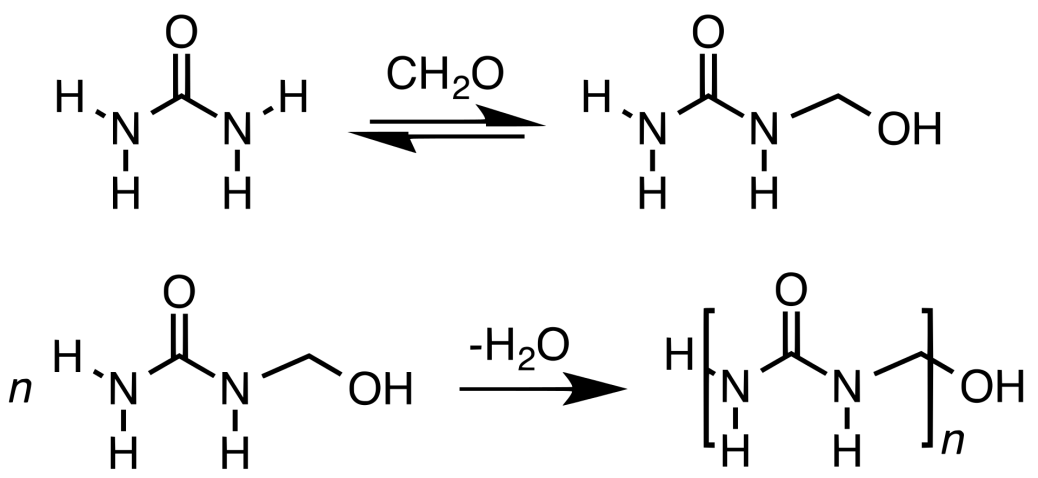
First stage in the formation of urea formaldehyde resins. Reaction products of urea and formaldehyde. Monomethylol urea is obtained by reacting one molecule of formaldehyde and one molecule of urea.

1000-82-4.gif

Specifications
Content: 95% minimum
Appearance : White Powder
Odour : Odourless
Melting temperature : Approx. 105 – 116 °C
Density : Approx. 1.35g/cm3 (20 °C)
Bulk density : Approx. 500 kg/m3 (20 °C)

Application: They are used to produce finishing agent, cross-linking agent, slow-release fertilizer, feed additive, and medical reagent.

Packing: Available in 25kg woven bag or 25kg cardboard drum.

Storage: Methylolurea must be protected from heat and moisture. It has an extended shelf life of one year when store at 2-8°C.

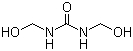
Dimethylolurea (CAS: 140-95-4)

N,N’-Dimethylolurea is a free flowing, white powder. It is readily soluble in hot water.

140-95-4.gif

Specifications:

General quality:

Content:
Methylolurea : Approx. 10%
N,N’-Dimethylolurea : Approx. 90%
Appearance : White Powder
Odour : Odourless
Melting temperature : Approx. 115 – 125 °C
Density : Approx. 1.35g/cm3 (20 °C)
Bulk density : Approx. 500 kg/m3 (20 °C)

Top quality

Content: 98% min
Appearance : White Powder
Odour : Odourless
Melting temperature : Approx. 116 – 125 °C
Density : Approx. 1.35g/cm3 (20 °C)
Bulk density : Approx. 500 kg/m3 (20 °C)

Application: They are used to produce finishing agent, cross-linking agent, slow-release fertilizer, feed additive, and medical reagent. Generally in the production of Photographic gels, Diagnostic indicators and Specialty coatings.

Packing: Available in 25kg woven bag or 25kg cardboard drum.

Storage: N,N’-Dimethylolurea must be protected from heat and moisture. It has an extended shelf life of one year when store at 2-8°C.

Uses of Urea formaldehyde

UFresinSyn.svg

Urea-formaldehyde is pervasive. Examples include decorative laminates, textiles, paper, foundry sand molds, wrinkle resistant fabrics, cotton blends, rayon, corduroy, etc. It is also used to glue wood together. Urea formaldehyde was commonly used when producing electrical appliances casing (e.g. desk lamps). Foams have been used as artificial snow in movies.

Agricultural use

Urea formaldehyde is also used in agriculture as a controlled release source of nitrogen fertilizer. Urea formaldehyde’s rate of decomposition into CO2 and NH3 is determined by the action of microbes found naturally in most soils. The activity of these microbes, and, therefore, the rate of nitrogen release, is temperature dependent. The optimum temperature for microbe activity is approximately 70-90 °F (approx 20-30 °C).

Foam insulation

Urea-formaldehyde foam insulation (UFFI) dates to the 1930s and made a synthetic insulation with R-values near 5.0 per inch. It is a foam, like shaving cream, that is easily injected or pumped into walls. It is made by using a pump set and hose with a mixing gun to mix the foaming agent, resin and compressed air. The fully expanded foam is pumped into areas in need of insulation. It becomes firm within minutes but cures within a week. UFFI is generally found in homes built before the 1970s, often in basements, crawl spaces, attics, and unfinished attics. Visually it looks like oozing liquid that has been hardened. Over time, it tends to vary in shades of butterscotch but new UFFI is a light yellow color. Early forms of UFFI tended to shrink significantly. Modern UF insulation with updated catalysts and foaming technology have reduced shrinkage to minimal levels (between 2-4%). The foam dries with a dull matte color with no shine. When cured, it often has a dry and crumbly texture.