
Newly developed type with high content up to 2*10^11 spores/g WP for drop irrigation.
Any interest can contact with us by email to sales@lin-chemical.com

Newly developed type with high content up to 2*10^11 spores/g WP for drop irrigation.
Any interest can contact with us by email to sales@lin-chemical.com
Bacillus amyloliquefaciens and its secretions have significant antagonistic effects on various pathogenic bacteria that cause root rot of fruits and vegetables, and can effectively prevent and control root rot of fruits and vegetables.
Soak the fruit and vegetable seedlings in the bacterial solution prepared by Bacillus amyloliquefaciens with a concentration of 0.5 × 10⁹ ~ 1.5 × 10⁹ cfu/mL for 5 ~ 15 minutes before planting, and at the same time 18 ~ 22 days after planting the fruit and vegetable seedlings with a concentration of 0.5 × 10⁹~1.5×10⁹cfu/mL of Bacillus amyloliquefaciens by irrigating the roots once, and the dosage of 8~12L/hm2 was appropriate.
The field control effect test results showed that the control effect of Bacillus amyloliquefaciens on cucumber root rot was 56.29%, the control effect on tomato root rot was 66.75%, and the control effect on strawberry root rot was 74.17%.
The effect is remarkable.
Bacillus amyloliquefaciens strain for preventing and controlling root rot of fruits and vegetables and its application.
The strain has a significant antagonistic effect on common pathogens that cause root rot of fruits and vegetables, especially for strawberry root rot, and has a strong ability to produce 3-indoleacetic acid (IAA) and siderophos. It can not only effectively prevent and cure root rot of fruits and vegetables, but also promote the absorption of nutrients by plants and promote plant growth.
The most suitable growth temperature for Bacillus amyloliquefaciens is 28-37 ℃.
Bacillus amyloliquefaciens is widely distributed in nature, not only can exist in soil, plant rhizosphere surface, deep sea water and the external environment, but also common in plants.
Bacillus amyloliquefaciens is non-toxic and harmless to humans and animals, and does not pollute the environment.
Bacillus amyloliquefaciens has abundant metabolites, has broad-spectrum antibacterial activity, strong resistance to stress, fast growth and good stability.
The extracellular enzymes produced by Bacillus amyloliquefaciens mainly include phytase, chitinase, glucanase, protease, amylase, rennet, etc. The main lipopeptide metabolites are surfcatian, Antagonistic active substances such as fengycin, litarin and Bacillo-my-cinD, also produce the plant growth hormone indole-3-acetic acid (IAA).
The growth and metabolism of Bacillus amyloliquefaciens produces active substances such as low molecular weight antibiotics and antibacterial protein polypeptides, which can inhibit pathogenic bacteria and nematodes; the active substances of most metabolites are thermally stable, insensitive to ultraviolet irradiation and protease treatment, and have acid and alkali resistance, etc.
Liquid with 200kg/drum
1-50billion/ml
Powder with 25kg/bag
20-100billion/g
Bacillus amyloliquefaciens can produce low molecular weight antibiotics, antibacterial proteins or polypeptides and other active substances in the process of growth and reproduction, and can simulate tomato leaf mold, early blight, gray mold; cucumber, melon fusarium wilt, anthracnose, pepper late blight and other harmful bacteria.
By metabolizing cellulase, protease and small molecular organic acid, Bacillus amyloliquefaciens can decompose soil organic matter, activate insoluble phosphorus and potassium and other potential nutrients, improve crop rhizosphere micro-ecological environment, and improve soil fertility.
Bacillus amyloliquefaciens can induce plants to secrete endogenous hormones rapidly such as gibberellin, indole acetic acid, cytokinin, etc., promote plant root growth, and enhance plant disease resistance.
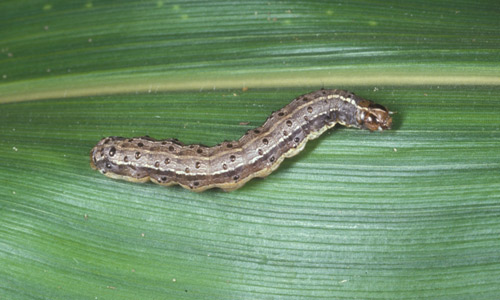
Control fall armyworm ( Spodoptera frugiperda ) with an insecticidal fungi-metarhizium anisopliae
Whole biological:
Combination of biological and chemical:
 lin-chemical.com