Agricultural Adjuvants: The Invisible Catalyst for High-Efficiency Farming

Core Value: Precision, Protection, and Performance.
Agricultural adjuvants are the secret weapon in modern precision farming. By optimizing the physical and chemical properties of pesticides and fertilizers, they ensure every drop counts—enhancing efficacy while minimizing environmental impact.

The Three “Superpowers” of Adjuvants:

1. The Physical “Gatebreaker”

  • Dissolving Hydrophobic Barriers: Waxy layers on leaves (like lotus or cabbage) and pest exoskeletons (like scale insects) are tough to penetrate. Adjuvants act as a “breaker,” rapidly dissolving these barriers.
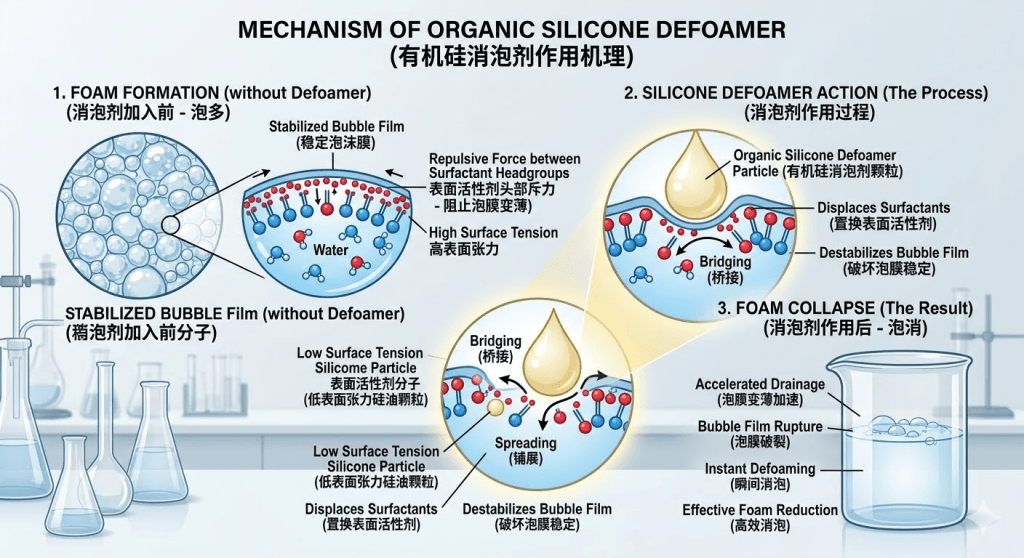
  • Defeating Surface Tension: Ordinary water droplets roll off leaves. With adjuvants (like Organosilicon or D-limonene), droplets “flatten” instantly, increasing the contact area geometrically.

2. The Chemical “Carrier & Stabilizer”

  • Transmembrane Transport: Adjuvants act as a “delivery vehicle,” dragging pesticide molecules through cell walls into the plant’s systemic circulation—transforming a surface treatment into a deep therapy.
  • UV & Evaporation Shield: Under high heat or intense light, oil-based adjuvants form a protective film to prevent active ingredients from evaporating or degrading prematurely.

3. The Macro Strategy: “Three Reductions & One Boost”

  • Reduced Dosage: Achieve the same control effect with 10%-30% less pesticide.
  • Reduced Residue: Lower chemical input leads to cleaner, safer agricultural products.
  • Reduced Pollution: Less runoff into soil and water sources, protecting our ecosystem.
  • Boosted Efficacy: Ensures a “one-shot” success, especially during drought or severe pest outbreaks.

Kasugamycin: A High-Efficiency & Low-Residue Agricultural Fungicide

Kasugamycin, also known as Kasin, is a bio-sourced antibiotic fungicide derived from the metabolites of Streptomyces kasugaensis. As a cornerstone for green and pollution-free agricultural production, it offers powerful systemic properties with both preventive and curative effects.

1. Core Mechanism of Action of Kasugamycin

  • Inhibition of Protein Synthesis:Kasugamycin binds specifically to the 30S subunit of the pathogen’s ribosomes. This interferes with the initiation stage of amino acid translation, effectively halting the growth and reproduction of bacteria and fungi.
  • High Selectivity: It targets the protein synthesis systems of pathogens specifically, ensuring extremely low toxicity to humans, livestock, and the crops themselves.

2. Primary Targets of Kasugamycin

Kasugamycindemonstrates exceptional efficacy against a wide range of bacterial and certain fungal diseases:

  • Rice: Primarily used for Rice Blast (Seedling, Leaf, and Panicle Blast).
  • Vegetables: Effective against Bacterial Angular Leaf Spot (cucumbers, melons), Soft Rot (Chinese cabbage, potatoes), Canker, and Leaf Mold (tomatoes).
  • Fruit Trees: Controls Citrus Canker, as well as Fire Blight in apples and pears.

3. Key Product Features of Kasugamycin

  • Excellent Systemic Conductivity: Rapidly absorbed by roots, stems, and leaves. Once inside the plant, it translocates efficiently and remains resistant to rain wash-off.
  • High Safety Profile: Safe for most crops at recommended doses. Note: Use with caution on sensitive varieties like certain beans, lotus roots, and sorghum, as there is a risk of phytotoxicity.
  • Versatile Compatibility: Frequently tank-mixed with Jinggangmycin or Copper Quinolone to expand the antimicrobial spectrum and enhance overall performance.

What’s the functions of 1-MCP in agriculture?

In the field of agriculture and post-harvest treatment, 1-MCP (1-Methylcyclopropene) is known as the “youth preservative” for fruits and vegetables. As a synthetic ethylene receptor blocker, its primary functions are as follows:

1. Potent Inhibition of Ripening and Senescence

  • Principle: The molecular structure of 1-MCP is highly similar to ethylene. It irreversibly binds to the ethylene receptors on the surface of plant cells before ethylene can.
  • Effect: It blocks the transmission of ethylene (the ripening hormone) signals. Even in the presence of ambient ethylene, the fruit cannot “sense” it, which significantly delays softening, color change, and the respiration peak.

2. Extension of Shelf Life

  • Firmness Maintenance: It effectively inhibits the activity of pectinase, maintaining the crispness of fruits like apples, pears, and kiwis.
  • Quality Preservation: It delays the degradation of chlorophyll, keeping vegetables (such as broccoli) vibrant green and reducing the consumption of nutrients like sugars and vitamins.

3. Prevention of Post-harvest Physiological Disorders

  • It significantly reduces disorders caused by ethylene sensitivity, such as superficial scald in apples and the premature dropping of buds or petals in floral crops.

Functions of D-Limonene

D-Limonene is a natural terpene compound extracted from the peels of citrus fruits. It is currently a highly popular “green” active ingredient in the international market. Its primary functions are as follows:

1. Powerful Bio-insecticide & Acaricide

  • Physical Suffocation and Dissolution: D-Limonene rapidly dissolves the waxy cuticle of the insect’s exoskeleton (targeting pests like aphids, whiteflies, thrips, and spider mites).
  • Mode of Action: It causes leakage of body fluids, dehydration, and clogs the spiracles, leading to death by suffocation. Due to this physical killing mechanism, it is extremely difficult for pests to develop resistance.

2. Excellent Adjuvant & Penetrant

This is its most prominent function when used in tank mixes:

  • Synergistic Effect: D-Limonene possesses exceptional penetrating power, acting as a carrier to help other pesticide ingredients penetrate the plant’s cuticle or the hard shells of insects, significantly enhancing overall efficacy.
  • Spreading and Cleaning: It reduces the surface tension of the spray solution, ensuring more uniform distribution on leaves, and can “wash away” insect honeydew and sooty mold.

3. Fungicidal Properties

  • Fungal Inhibition: It exhibits inhibitory effects against diseases such as powdery mildew and downy mildew and is commonly used for the post-harvest preservation of fruits and vegetables.

4. Safety & Environmental Profile

  • MRL Exemption: In the U.S. (EPA) and the European Union, D-Limonene is typically listed as a substance exempt from Maximum Residue Limits (MRLs), making it ideal for the “zero-residue” production of high-value export crops.

How could Trichoderma asperellum be a helper in farming?

Trichoderma asperellum is one of the most widely used fungal fungicides in the international biopesticide market, renowned for its robust survival competitiveness and multiple modes of action.

Below is its application across major crops:

1. Core Target Crops and Diseases

  • Vegetables (Tomato, Cucumber, Pepper): Primarily used to control Gray Mold (Botrytis), Damping-off, Root Rot, and Fusarium Wilt. It is the preferred choice for organic greenhouse vegetable production.
  • Bananas (Tropical Regions): It is used to combat the highly destructive Banana Fusarium Wilt (Panama Disease).
  • Grapes and Strawberries: Focuses on controlling Gray Mold during the fruit ripening stage. Since it leaves no pesticide residues, it solves disease prevention challenges right before harvest.
  • Flowers (Roses, Carnations): Used for soil treatment and foliar spraying to prevent root diseases and enhance plant vigor.

2. Unique Modes of Action

  • Hyperparasitism: The hyphae of T. asperellum can entwine and penetrate the hyphae of pathogenic fungi, secreting cellulase and chitinase to dissolve and digest them.
  • Competition and Antagonism: Its extremely fast growth rate allows it to quickly occupy root surface space and consume nutrients, leaving no room for pathogens to establish.
  • Induced Resistance: It activates the plant’s own immune system (Induced Systemic Resistance, ISR), making crops more resilient to future pathogen attacks.
  • Plant Growth Promotion: It secretes auxin-like substances that significantly promote root development, improving the efficiency of nutrient and water uptake.

3. Key Application Points

  • Prevention First: As a protective fungicide, it should be applied before or at the very early onset of disease.
  • Soil Treatment: Apply via drip irrigation or mix with basal fertilizers to form a “protective shield” around the rhizosphere.
  • Environmental Requirements: Prefers moist environments (optimum humidity between 60%-80%). Avoid forced mixing with strong chemical fungicides.

4. Market Competitiveness

Environmental Adaptability: Compared to other Trichoderma species (such as T. harzianum), T. asperellum shows stronger adaptability to temperature and environmental fluctuations, performing exceptionally well in tropical and subtropical regions.


How does Helicoverpa armigera Nucleopolyhedrovirus (HaNPV) help in your farming?

Helicoverpa armigera Nucleopolyhedrovirus (HaNPV) is a highly efficient and selective bio-pesticide specifically used to control the cotton bollworm (Helicoverpa armigera) and its closely related species.

The following is an analysis of its primary applications in both international and domestic markets:

1. Core Target Crops

  • Cotton: The most classic application field. It is used to control cotton bollworm larvae that have developed severe resistance to chemical pesticides (such as pyrethroids).
  • Vegetables (Peppers, Tomatoes, Eggplants): Widely used in export-oriented vegetable bases because NPV leaves no pesticide residues and does not affect the harvest interval.
  • Soybeans and Corn: As mixed infestations of Fall Armyworm and Cotton Bollworm occur, HaNPV is frequently used as a critical component of Integrated Pest Management (IPM).
  • Tobacco and Legumes: Viral insecticides offer extremely high safety for sensitive crops that are prone to phytotoxicity from chemicals.

2. Mode of Action and Characteristics

  • High Specificity: It only infects cotton bollworms and closely related larvae, remaining completely harmless to humans, livestock, natural enemies (such as ladybugs and lacewings), and the environment.
  • “Secondary Transmission”: Larvae become infected after consuming contaminated leaves. Upon death, the carcass liquefies, releasing hundreds of millions of polyhedra. These are spread by rain and insect activity, triggering secondary infections in the field.
  • No Resistance Risk: As a biological pathogen, it is extremely difficult for pests to develop resistance against it.

3. Application Key Points (Best Practices)

  • Application Timing: Must be applied during the peak egg-hatching stage to the 1st-2nd instar larval stage. Once larvae reach later instars (3rd instar and above), the insecticidal efficacy drops significantly.
  • Environmental Factors: The virus is sensitive to ultraviolet (UV) light; it is recommended to apply the product in the evening or on cloudy days.
  • Mixing Recommendations: Often mixed with Bacillus thuringiensis (Bt) to broaden the insecticidal spectrum, or with low doses of chemical pesticides to improve the “knockdown” speed (quick-acting effect).

Using Metarhizium to improve our farming life

Metarhizium primarily kills pests through parasitism and is widely applied to the following key crops:

1. Coffee

  • Target Pest: Coffee Berry Borer (Hypothenemus hampei).
  • Function: Metarhizium is the most critical biological control method for organic coffee cultivation, often used in conjunction with pheromone traps.

2. Sugar Cane

  • Target Pest: Spittlebugs (Mion pest).
  • Scale: Metarhizium is used in large-scale sugarcane plantations as a substitute for chemical insecticides, offering long-lasting effects without inducing resistance.

3. Bananas and Plantains

  • Target Pest: Banana Weevil.
  • Application: Applied via spraying or injection to target larvae and adults in the soil, protecting the root system.

4. Pastures and Row Crops

  • Target Pest: Locusts, Grasshoppers, and various Hemiptera (bugs).
  • Feature: Environmentally friendly; it does not harm livestock in the pastures.

5. Vegetables and Flowers — Export-Oriented

  • Target Pest: Thrips, Whiteflies, and soil-dwelling pests (White grubs/scarab larvae).
  • Advantage: Meets the “zero residue” requirements for exporting to European and American markets.

Core Advantages of Metarhizium

  • Broad-Spectrum Insecticide: Pathogenic to over 200 species of insects.
  • Long-Lasting Effect: Strong colonization ability in the soil, enabling secondary infection through “insect-to-insect” transmission.
  • Resistance Management: Used in rotation with chemical pesticides to effectively delay the development of pest resistance to conventional treatments.

Microbial Inoculants: The Biological Engine for Green Production

Microbial Inoculants are advanced biological agents formulated with active microorganisms (such as bacteria, fungi, and actinomycetes) through industrial processing. As a cornerstone of “green production,” they are widely utilized in modern agriculture, environmental protection, and biomedicine.

1. Core Functions & Benefits

  • Soil Amendment: Effectively improves soil aggregate structure and activates mineral elements (Silicon, Phosphorus, Potassium), significantly enhancing nutrient use efficiency (NUE).
  • Growth Promotion: Nitrogen-fixing and phosphorus-solubilizing bacteria establish symbiotic relationships with roots, secreting growth hormones that stimulate root development and boost yields.
  • Biocontrol & Resilience: By establishing dominant microbial colonies, these agents suppress soil-borne pathogens and improve crop resistance to continuous cropping obstacles, drought, and diseases.
  • Decontamination: Degrades organic toxins in soil and neutralizes water pollutants in aquaculture environments.

2. Common Classifications

Microbial inoculants are categorized by their specific functions or microbial strains:

  • By Function:
    • Nitrogen-fixing Inoculants: (e.g., Rhizobia) Convert atmospheric nitrogen into plant-available forms.
    • P/K-Solubilizing Inoculants: Break down insoluble minerals in the soil.
    • Decomposition Accelerants: Used for rapid fermentation and deodorization of organic waste (manure, straw).
  • By Strains: Commonly includes Bacillus subtilisBacillus licheniformisTrichoderma harzianum, photosynthetic bacteria, and lactic acid bacteria.

3. Application & Guidelines

  • Early Application: Apply during sowing, transplanting, or the early stages of disease. Microbes need time to colonize and form a dominant population in the rhizosphere.
  • Application Methods: Suitable for seed soaking, root drenching, fertilizer blending, or foliar spraying.
  • Key Precautions:
    • Avoid High Temperatures: Most live bacteria are heat-sensitive. Avoid direct sunlight or using liquids above 40°C.
    • Avoid Chemical Mixing: Do not mix with strong acids, alkalis, or chemical fungicides to ensure microbial viability.
    • Nutritional Support: Combine with organic fertilizers to provide the necessary carbon and energy sources for microbial reproduction.

Season‘s Greetings!

On behalf of Lin Chemical International, I extend my sincerest holiday greetings to all our friends, old and new.

Wishing you a happy holiday and all the best in the New Year! Thank you for all your support in 2025.

We highly value our partnership and look forward to creating even greater success together in the new year.

Wishing you a happy holiday and all the best for the start of 2026!

Lin Chemical International

Merry Christmas 2025 & Happy New Year 2026!

Usage of 1-MCP

1-MCP is used for the preservation of fruits, vegetables, and flowers that produce or are sensitive to ethylene.

1-MCP effectively delays ripening and senescence, maintains the firmness and crispness of the product, preserves its color, flavor, aroma, and nutrients, effectively maintains the plant’s disease resistance, reduces microbial rot and physiological disorders, and decreases water evaporation, preventing wilting. Treating fruits, vegetables, and flowers with 1-MCP significantly extends their shelf life.