Nematicidal activity of tea saponin

Nematicidal activity of theaceae plant extract: Ethanol extracts of oil-tea cake and other 8 plant materials had been prepared. Indoor experiments were carried on to test its nematicidal activity in vitro against Meloidogyne incognita Juvenile 2 (J2).

The results showed, totally 5 plant extracts, including extracts of oil-tea seed, tea seed, oil-tea cake, tea saponin extracts (65%), refined-saponin, reached medium-strong nematicidal activity.

Tea Saponin

An integrated view of plant–pathogen interactions

Plants are engaged in a continuous co-evolutionary struggle for dominance with their pathogens. The outcomes of these interactions are of particular importance to human activities, as they can have dramatic effects on agricultural systems.

The recent convergence of molecular studies of plant immunity and pathogen infection strategies is revealing an integrated picture of the plant–pathogen interaction from the perspective of both organisms.

Plants have an amazing capacity to recognize pathogens through strategies involving both conserved and variable pathogen elicitors, and pathogens manipulate the defence response through secretion of virulence effector molecules. These insights suggest novel biotechnological approaches to crop protection.

–Plant immunity depends on cell-autonomous events that are related to animal innate immunity, but plants have a greatly expanded recognition repertoire to compensate for their lack of an adaptive immune system. Ongoing research is revealing the recognition capacity of the plant immune system and concurrent studies on pathogen biology are beginning to unravel how these organisms manipulate host immunity to cause disease.

–Plants have evolved two strategies to detect pathogens. On the external face of the host cell, conserved microbial elicitors called pathogen-associated molecular patterns (PAMPs) are recognized by receptor proteins called pattern recognition receptors (PRRs); stimulation of PRRs leads to PAMP-triggered immunity (PTI). The second class of perception involves recognition by intracellular receptors of pathogen virulence molecules called effectors; this recognition induces effector-triggered immunity (ETI).

–PTI is generally effective against non-adapted pathogens in a phenomenon called non-host resistance, whereas ETI is active against adapted pathogens. However, these relationships are not exclusive and depend on the elicitor molecules present in each infection.

–Successful pathogens are able to suppress PTI responses and thereby multiply and cause disease. They achieve suppression through the deployment of ‘effector’ proteins. Plant receptor proteins can recognize pathogen effectors either by direct physical association or indirectly through an accessory protein.

–Our understanding of effector proteins and their host targets is at an early stage. Sophisticated biochemical screens for host protein targets that interact with the diverse suites of pathogen effectors is likely to lead to the identification of important components of host defence mechanisms, and teach us more about host immune pathways and pathogenicity strategies.

–It is crucially important for the deployment of existing and novel resistance genes in agriculture that we advance our knowledge of plant–pathogen molecular co-evolution.

By Peter N. Dodds & John P. Rathjen

Plant immunity: towards an integrated view of plant–pathogen interactions

Plant immunity

Plants resist attacks by pathogens via innate immune responses, which are initiated by cell surface-localized pattern-recognition receptors (PRRs) and intracellular nucleotide-binding domain leucine-rich repeat containing receptors (NLRs) leading to pattern-triggered immunity (PTI) and effector-triggered immunity (ETI), respectively.

Although the two classes of immune receptors involve different activation mechanisms and appear to require different early signalling components, PTI and ETI eventually converge into many similar downstream responses, albeit with distinct amplitudes and dynamics.

Increasing evidence suggests the existence of intricate interactions between PRR-mediated and NLR-mediated signalling cascades as well as common signalling components shared by both.

Effect of γ-PGA on the yield and quality of potted Brassica chinensis

An effect of a fortified fertilizer by γ-PGA on the yield and quality of potted Brassica chinensis was studied by XU Zongqi etc..

The results showed that the contents of chlorophyll,above ground fresh weight,nitrate,vitamin C and ammonium nitrogen with γ-PGA treatment had remarkable differences compared with the control. Under normal fertilization,the treatment with 50 mg /kg of γ-PGA led to significant increasing of chlorophyll under ground fresh weight compared with the control.

In particular,the production of above ground fresh weight was increased by 8. 8% . The efficiency of ammonium nitrogen
and nitrogen was improved by 10. 6% . The nitrate content decreased by 44. 8% and the content of Vc increased by 18. 1%,by using 100 mg /kg of γ-PGA

When nitrogen fertilizer reduced by 15% ,the treatment of 20 mg /kg of γ-PGA improved the nitrogen use efficiency by 10. 2% - 11. 6% .

Know more about γ-PGA from Lin Chemical

γ-PGA

γ-polyglutamic acid treatment on Ginger

By foliar spraying of “γ-polyglutamic acid” diluted 1:500 times and 1:300 times on ginger, the stem height, branch, leaf length, leaf width, stem and leaf fresh weight, fresh ginger stem tuber weight were measured respectively. comparative analysis, etc.


Foliar spraying of “γ-polyglutamic acid” has different degrees of promoting effect on the growth and development of ginger.


The 1:500 and 1:300 times dilution spraying of γ-polyglutamic acid, fresh ginger stem tubers in the experimental area reached 87 450 kg/hm2 and 97 318 kg/hm2, respectively, an increase of 13.36% and 26.15% compared with the control, both of which were significantly or extremely high,significant level.

Know more about γ-polyglutamic acid from Lin Chemical

γ-polyglutamic acid

Treatment of potato with γ-PGA

Using potassium sulfate (potassium oxide ≥ 40%) 35 kg + diammonium phosphate (15-25-0) 10 kg as the basic formula, with different amounts of added r-polyglutamic acid microbial inoculum as a treatment combination, in other management In the case of consistent measures, the growth of above-ground stems and vines and the composition of underground tuber yields were investigated.

A comparative analysis of the survey data shows that the treatment with the addition of r-polyglutamic acid microbial inoculants can effectively regulate the growth of above-ground stem vines and underground potato pieces, and with the increase in the amount of microbial inoculants used, the adjustment effect is more obvious and effective. Control the growth of stems and vines on the ground, promote branching, and increase the area coefficient of large leaves, thereby promoting the expansion and growth of underground potato pieces and improving economic benefits.

Check more details about r-polyglutamic acid from Lin Chemical

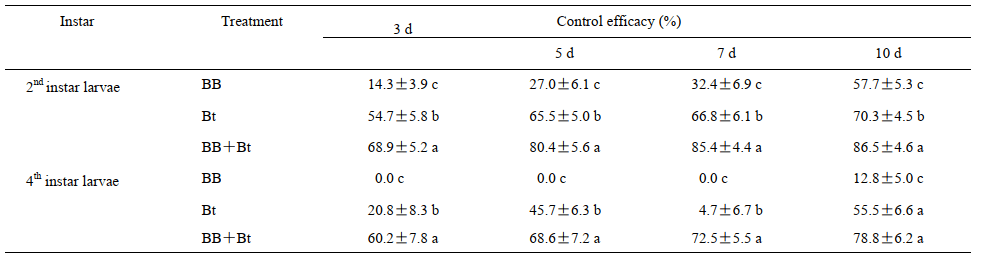
Combination of insecticidal fungi with Bt

Bt produces endotoxin (that is, parasporal crystals), which paralyzes the intestinal tract and destroys the intima, mainly due to stomach toxicity.

Fungal insecticides invade the body of insects through the body wall, deprive the host of nutrients and secrete toxins and cause the insects’ death.

Bt combined with Beauveria bassiana or Metarhizium anisopliae has a significant synergistic effect on Musca domestica, Helicoverpa armigera and Earias vittella.


It indicated that the stomach toxicity of Bt and the contact killing effect of insecticidal fungi could be synergistic.

Bt

Beauveria bassiana

Metarhizium anisopliae

Bacillus thuringien

Bacillus thuringiensis (Bt) is currently the largest and most widely used biopesticide. Its main active ingredient is one or several insecticidal crystal proteins (ICPs), also known as delta-endotoxin, which are harmful to Lepidoptera, Coleoptera, Diptera, Hymenoptera, Homoptera, etc. Insects, as well as arthropods such as animal and plant nematodes and acarids, have specific poisoning activities, and are safe for non-target organisms.

Therefore, Bacillus thuringiensis have the advantages of specificity, high efficiency, and safety to humans and animals.

At present, there are more than 100 kinds of commercial preparations of Bacillus thuringiensis , and it is the most widely used, the largest application volume and the best microbial insecticide in the world, so it has attracted much attention.