
Tripterygium wilfordii is one of the most poison traditional Chinese herbal medicines in China.
The toxicity of Tripterygium wilfordii is very high. It has long been used to prevent and control various insects, rodents and mites.
Tripterygium wilfordii is one of the most poison traditional Chinese herbal medicines in China.
The toxicity of Tripterygium wilfordii is very high. It has long been used to prevent and control various insects, rodents and mites.
| Function | Amino Acid |
|---|---|
| Anti-stress agent | Hyp, Pro |
| Chelating agent | Cys, Glu, Gly, His, Lys |
| Cold weather resistance | Ala, Arg |
| Generative development of plants and improvement of the plant pollen fertility | Hyp, Pro |
| Growth stimulator | Glu |
| Precursor of auxin | Ser, Trp, Val |
| Precursor of chlorophyll | Gly |
| Precursor of polyamines: necessary to start the cell division | Arg |
| Precursor to the formation of lignin and woody tissues | Phe |
| Regulation of the water balance | Hyp, Pro, Ser |
| Reserve of organic nitrogen necessary for the synthesis of other amino acids and proteins | Glu |
| Stimulation of the chlorophyll synthesis | Ala, Lys, Ser |
| Stimulation of the ethylene synthesis | Met |
| Stimulation of the germination | Asp, Glu, Lys, Met, Phe, Thr |
| Stimulation of the hormone metabolism | Ala |
| Stimulation of the resistance mechanism to viruses | Ala |
check more for Lin chemical Amino acid
When applied, amino acid provides a number of benefits to both plant and soil health, including improved soil buffering capacity, greater plant root growth, higher plant stress tolerance, improved fertiliser efficiency and uptake of other inputs, enhanced cell division and greater yields.
The amino acids are building blocks of protein molecules and hence used in dietary and feed supplements of human and animals, respectively (Mahmood 2015). These organic molecules have various role, such as animal feed additives (lysine, methionine, threonine), flavor enhancers (aspartic acid, monosodium glutamate, serine), antioxidants (cysteine, L-tryptophan and L-histidine), as sweeteners (aspartame made from aspartic acid and phenylalanine), and ingredients in cosmetic and medicinal products (Bommarius et al. 1998; Ikeda 2003; Mueller and Huebner2003;Leuchtenberger et al. 2005; Park and Lee 2008; Ivanov et al. 2014).
Additionally, amino acids are suggested as dietary supplements for body building, bruxism, depression, sleep aid, premenstrual dysphoric disorder, attention deficit-hyperactivity disorder, and smoking cessation. Nonessential amino acids can be synthesized by human body but essential amino acids cannot be synthesized in human body but are required for protein synthesis and therefore, dietary supplement is necessary from external sources.
Hence, production of essential amino acids at industrial scale using microbial sources is promising and desirable. The worldwide production technology for amino acids is dominated by microbial fermentation and enzymatic processes owing to cost-effectiveness, ecological acceptability and ease to produce enantiomerically pure amino acids
Microorganisms are a promising source of an enormous number of natural products, which have made significant contribution to almost each sphere of human, plant and veterinary life.
Natural compounds obtained from microorganisms have proved their value in nutrition, agriculture and healthcare. Primary metabolites, such as amino acids, enzymes, vitamins, organic acids and alcohol are used as nutritional supplements as well as in the production of industrial commodities through biotransformation.
Whereas, secondary metabolites are organic compounds that are largely obtained by extraction from plants or tissues. They are primarily used in the biopharmaceutical industry due to their capability to reduce infectious diseases in human beings and animals and thus increase the life expectancy.
Additionally, microorganisms and their products inevitably play a significant role in sustainable agriculture development.
It is the treatments given to the seeds before sowing to improve the germination and vigour potential and as well as to maintain the health of the seed.
Pre sowing seed treatments includes:
Check our seed treatment products, recipe can be customized,
The term “treated” means “to give an application of a pesticide or subject seed to a process designed to reduce, control or repel disease organisms, insects, or other pests which attack the seed or seedlings.
Check our seed treatment products:
Maintaining the quality of seed is dependent on many environmental factors, some of which are moisture, temperature, humirlity, and storage conditions. Even though these factors are properly accounted for, seed quality may still be reduced by certain seedborne diseases or destroyed by insects and other pests. Research has shown that treating seed with one or more pesticides is the most economical and efficient way to protect seed from these pests and improve seed quality.
Check our seed treatment products, recipe can be customized,
AG – SAP POTASSIUM POLYACRYLATE
If you have interest in any of them, can contact us for more details.
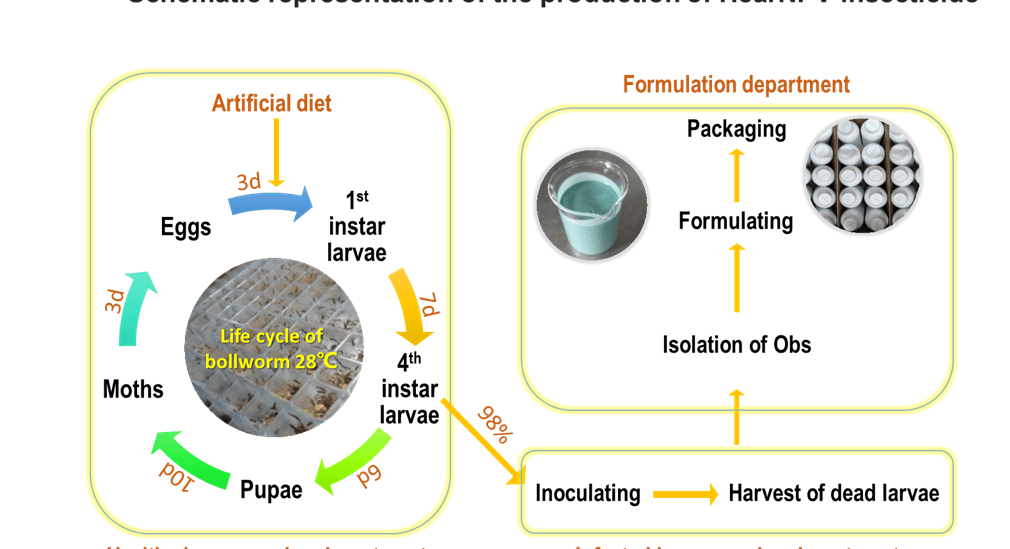
The production of Helicoverpa armigera NPV insecticide
 lin-chemical.com