
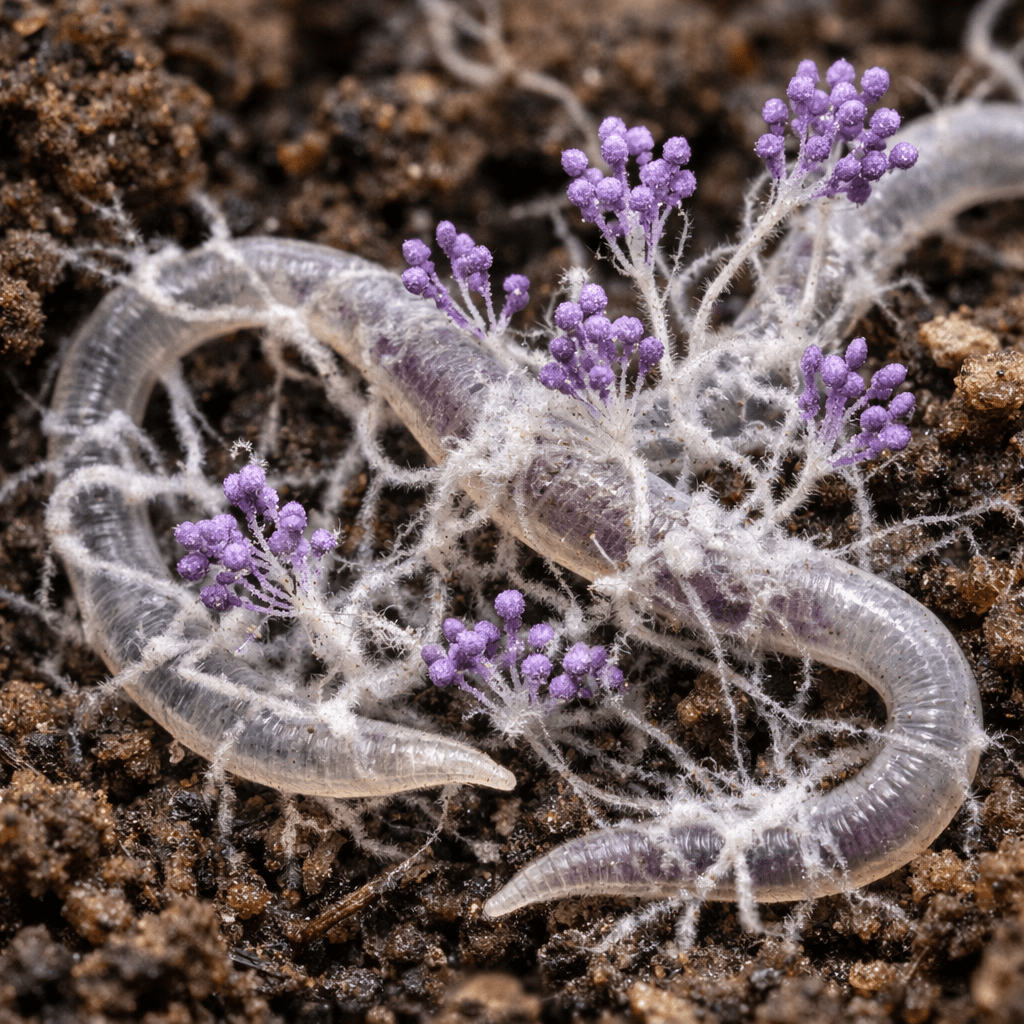
Paecilomyces lilacinus (now commonly reclassified as Purpureocillium lilacinum) is hailed as a “nematicidal weapon” in plant protection and is currently one of the most widely used biological control agents for nematodes in the world. It achieves comprehensive management of various plant pests and diseases through parasitism, toxin secretion, and improvement of the plant microenvironment.
1. Core Application: Bio-nematicide
The most prominent application of P. lilacinus is the control of plant-parasitic nematodes, especially root-knot nematodes, cyst nematodes, and stem nematodes.
- Parasitism: Its hyphae can surround and penetrate nematode eggshells, proliferating extensively within the egg to consume nutrients and replace tissues, leading directly to egg death. It can also parasitize active larvae and adult females.
- Enzymatic Degradation: It secretes highly active chitinases and proteases. These enzymes decompose key components of the nematode’s eggshell and body surface, making them more vulnerable to secondary infection by viruses or other pathogens.
- Applicable Crops: Widely used for vegetables (e.g., tomatoes, cucumbers, peppers), tobacco, tea, fruit trees (e.g., lychee, citrus), and Chinese medicinal herbs.
2. Broad-spectrum Pest Control
Beyond nematodes, P. lilacinus is an entomopathogenic fungus with pathogenicity against various agricultural pests:
- Hemiptera & Homoptera: Controls pests such as lychee giant stink bugs, citrus psyllids, black rice bugs, leafhoppers, and brown planthoppers.
- Thysanoptera & Coleoptera: Shows strong control potential against thrips (e.g., Scirtothrips dorsalis) and sweet potato weevils.
- Lepidoptera: Can parasitize the larvae of pests such as tea caterpillars and tiger moths.
3. Antagonism Against Plant Pathogens
P. lilacinus produces various metabolites that exhibit significant antagonistic effects against soil-borne or foliar diseases:
- Fungal Diseases: Shows inhibitory efficacy against tomato gray mold, corn leaf spot, wheat scab, and rice bakanae disease.
- Mechanism: The metabolites it produces can destroy the cell wall structure of pathogenic fungi, thereby killing the pathogens.
4. Growth Promotion and Soil Improvement
- Plant Growth Stimulation: P. lilacinus secretes active substances similar to plant auxins (such as indoleacetic acid) and gibberellins. At low concentrations, these can significantly promote seed germination and seedling growth.
- Soil Environment Improvement: P. lilacinus facilitates the transformation of insoluble phosphorus and potassium in the soil, improving nutrient utilization. Additionally, it assists in decomposing pesticide residues and chemical polymers, mitigating soil degradation caused by long-term chemical use.
 lin-chemical.com